
Why Workplace Culture Is the New Growth Strategy for Modern Businesses
Discover why workplace culture has become a critical business growth strategy. Learn how employee engagement, workplace wellness, team experiences, and culture-first leadership improve retention, productivity, and long-term business success.
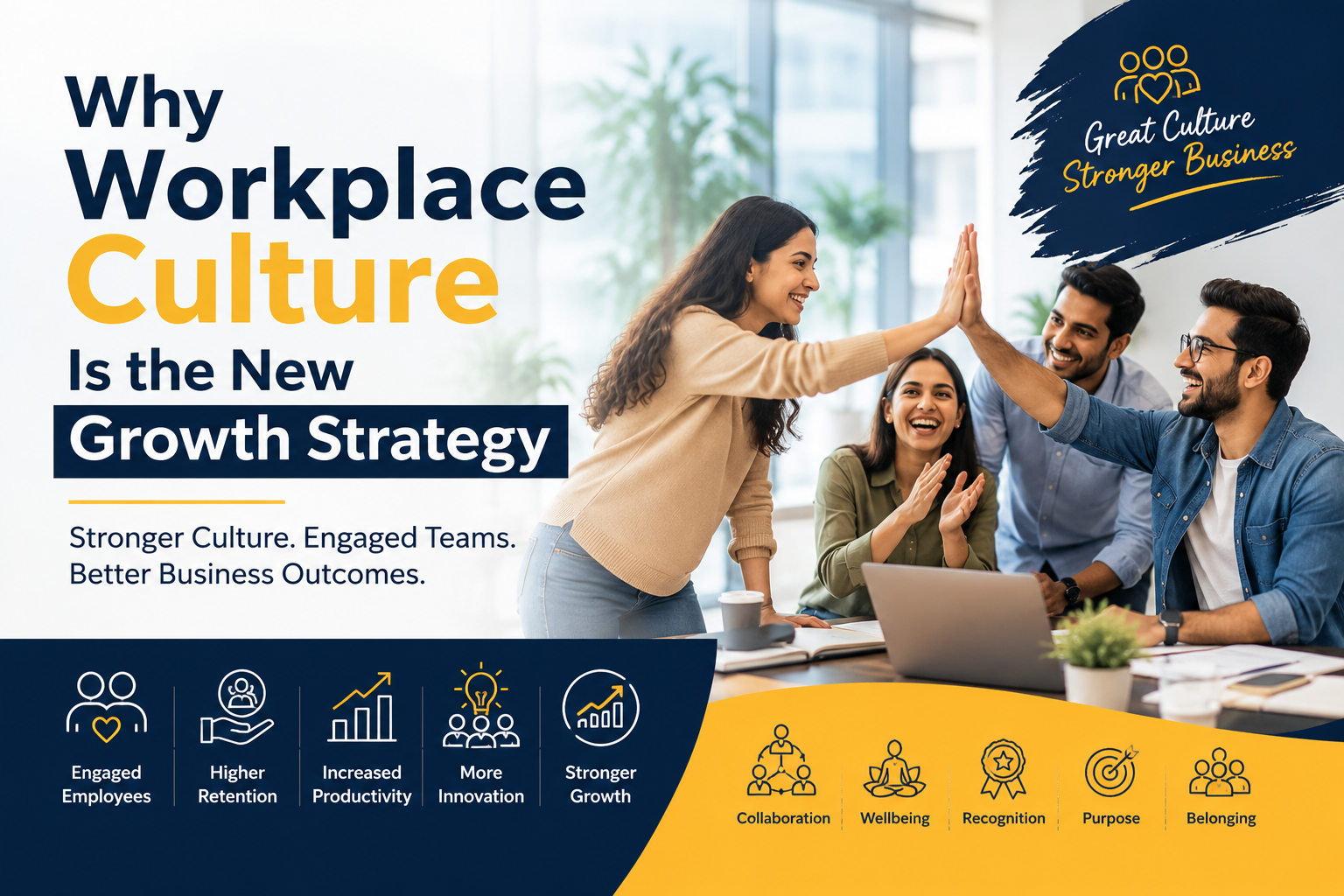
Why Workplace Culture Is the New Growth Strategy for Modern Businesses?
For years, workplace culture was often viewed as a secondary business priority - something discussed mainly within HR departments while leadership teams focused on revenue, operations, and growth metrics.
That mindset has changed dramatically.
Today, organizations across the world are recognizing that workplace culture is no longer just an internal initiative. It has become one of the strongest drivers of employee engagement, productivity, retention, innovation, and long-term business growth.
In modern workplaces, culture influences how employees collaborate, how leaders communicate, how teams perform, and ultimately how businesses grow.
Companies are no longer competing only through products or pricing. They are increasingly competing through employee experience and workplace culture.
And businesses that understand this shift are building stronger, more resilient organizations.
What Is Workplace Culture?
Workplace culture refers to the overall environment employees experience within an organization.
It is shaped by:
leadership behavior
communication styles
employee engagement
workplace values
collaboration
recognition
wellness initiatives
team experiences
growth opportunities
Culture is not defined by office décor, mission statements, or occasional celebrations.
It is defined by how employees feel while working inside an organization every day.
A strong workplace culture creates an environment where employees feel:
valued
motivated
connected
supported
heard
inspired to contribute
In today’s business landscape, workplace culture has become one of the most important competitive differentiators for organizations of all sizes.
Why Workplace Culture Matters More Than Ever?
The modern workforce has evolved significantly over the last few years.
Employees today are not only looking for compensation or job titles. They are looking for workplaces that offer:
purpose
flexibility
recognition
wellbeing
collaboration
meaningful experiences
emotional connection
This shift has accelerated because of:
hybrid work culture
increasing workplace stress
employee burnout
changing workforce expectations
growing emphasis on mental wellbeing
Gen Z entering the workforce
As a result, organizations with weak workplace culture are experiencing:
low employee engagement
higher attrition
disengaged teams
poor employer branding
recruitment challenges
At the same time, businesses investing in employee engagement programs, workplace wellness initiatives, and team-building experiences are seeing stronger organizational performance.
How Workplace Culture Directly Impacts Business Growth?
One of the biggest misconceptions about workplace culture is that it only affects employee morale.
In reality, culture directly impacts business performance.
Organizations with healthy workplace culture often experience stronger:
employee retention
productivity
collaboration
innovation
customer experience
employer reputation
Let’s look at how workplace culture contributes to long-term business growth.
1. Stronger Employee Retention
Employees are more likely to stay in organizations where they feel supported, recognized, and emotionally connected to the workplace.
When employees experience:
meaningful engagement
appreciation
growth opportunities
positive leadership
collaborative environments
they naturally develop stronger loyalty toward the organization.
In contrast, workplaces with poor culture often struggle with frequent turnover and disengagement.
Employee retention has become one of the biggest business challenges in modern workplaces, making culture a critical growth strategy rather than just an HR initiative.
2. Higher Employee Productivity
Engaged employees contribute more effectively to organizational success.
Teams working within positive workplace environments are often:
more collaborative
more motivated
more innovative
more proactive
Employees who feel connected to organizational values are also more likely to take ownership of their work and contribute beyond basic responsibilities.
This directly improves overall productivity and business performance.
3. Better Employer Branding
Employer branding is no longer built only through recruitment campaigns.
Today, workplace culture plays a major role in how organizations are perceived by potential employees.
Candidates actively evaluate:
employee experiences
workplace flexibility
team culture
leadership transparency
wellness initiatives
employee engagement activities
before joining an organization.
Companies known for strong workplace culture naturally attract better talent.
4. Increased Collaboration and Innovation
Innovation thrives in environments where employees feel psychologically safe.
A positive workplace culture encourages employees to:
share ideas openly
collaborate across teams
participate in discussions
contribute creatively
Organizations that invest in employee engagement and experiential workplace initiatives often build stronger interpersonal relationships within teams, leading to improved collaboration and innovation.
Workplace Culture Is No Longer Just an HR Function
One of the biggest shifts in modern organizations is that workplace culture is now viewed as a business strategy.
Culture impacts:
organizational growth
employee performance
customer experience
leadership effectiveness
retention
hiring
business reputation
As a result, workplace culture is no longer managed only by HR departments.
Leadership teams, founders, operations heads, and business managers are increasingly becoming active participants in building employee experience and workplace engagement.
This is why more organizations are investing in:
employee engagement activities
workplace wellness programs
leadership retreats
team-building experiences
corporate offsites
recognition initiatives
experiential corporate events
Businesses are beginning to understand that meaningful employee experiences create stronger organizations.
The Rise of Experiential Employee Engagement
Traditional engagement methods are becoming less effective in modern workplaces.
Employees today seek experiences that feel:
interactive
meaningful
personalized
collaborative
emotionally engaging
This has led to the rise of experiential employee engagement.
Experiential engagement focuses on creating immersive workplace experiences that strengthen:
team relationships
collaboration
trust
belonging
emotional connection
Some of the most effective employee engagement activities include:
corporate team-building programs
wellness workshops
experiential corporate events
leadership experiences
collaborative workshops
employee recognition programs
workplace culture initiatives
Modern organizations are increasingly using experiential engagement not just for entertainment, but as a strategic investment in workplace culture.
Why Employee Wellness Is Becoming Central to Workplace Culture
Employee wellness has become a major priority for modern businesses.
Organizations are recognizing that employee wellbeing directly affects:
engagement
productivity
retention
morale
workplace satisfaction
As a result, many companies are investing in:
wellness programs
mental health initiatives
mindfulness sessions
stress management workshops
fitness activities
burnout prevention strategies
A wellness-first workplace culture creates healthier, happier, and more engaged teams.
Employees who feel supported emotionally and mentally are more likely to remain motivated and connected to the organization.
What Modern Employees Actually Want From Workplace Culture?
The expectations employees have from workplaces have changed significantly.
Today’s workforce values:
flexibility
purpose-driven work
recognition
inclusivity
collaboration
work-life balance
authentic leadership
meaningful workplace experiences
Employees no longer want transactional workplaces.
They want environments where they feel respected, heard, and connected.
Organizations that fail to evolve with these expectations often struggle with disengagement and retention challenges.
Common Mistakes Companies Make While Building Workplace Culture
Many organizations invest in employee engagement activities but fail to create long-term cultural impact.
Some common mistakes include:
Treating Engagement as a One-Time Activity
Culture cannot be built through one annual celebration or occasional events.
Employee engagement requires consistency.
Prioritizing Activities Over Experiences
Employees seek meaningful and authentic workplace experiences — not just entertainment.
Successful engagement initiatives align with organizational values and employee wellbeing.
Ignoring Employee Feedback
Building strong workplace culture requires listening to employees regularly and adapting engagement strategies accordingly.
Creating Generic Engagement Programs
Cookie-cutter engagement activities often fail to create emotional connection.
Modern employees value personalized and thoughtful experiences.
Workplace Culture Trends Shaping Modern Businesses in 2026
The future of workplace culture is evolving rapidly.
Some major trends shaping modern workplaces include:
Hybrid Employee Engagement
As hybrid work models continue growing, companies are investing in:
virtual engagement activities
hybrid team-building programs
digital wellness initiatives
collaborative online experiences
Wellness-First Workplaces
Organizations are increasingly prioritizing:
mental wellbeing
emotional wellness
healthier work environments
burnout prevention
Experience-Led Employee Engagement
Modern businesses are shifting from traditional office events toward immersive and experiential workplace initiatives.
Recognition-Driven Culture
Employee recognition programs are becoming central to employee retention and workplace satisfaction.
Community-Centric Workplaces
Employees increasingly value belonging and connection.
Organizations are building stronger internal communities through collaborative experiences and culture-driven initiatives.
How Businesses Can Build a Stronger Workplace Culture?
Building workplace culture does not require dramatic transformation overnight.
Consistent and intentional actions often create the biggest impact.
Organizations can begin by:
improving internal communication
recognizing employee contributions
investing in employee wellness
encouraging collaboration
creating meaningful team experiences
prioritizing leadership participation
building employee engagement programs
The strongest workplace cultures are built through everyday employee experiences.
Why Workplace Culture Will Define the Future of Business?
Modern organizations are beginning to understand that workplace culture is not separate from business growth — it is directly connected to it.
Businesses that prioritize employee experience are building:
stronger teams
healthier workplaces
higher engagement
better retention
stronger employer brands
sustainable long-term growth
In an increasingly competitive business environment, workplace culture has become one of the most valuable strategic advantages a company can build.
Organizations investing in meaningful employee engagement and experiential workplace initiatives are not simply improving morale — they are creating workplaces where people genuinely want to contribute, collaborate, and grow.
And in the years ahead, that may become one of the biggest growth drivers any business can have.
Frequently Asked Questions (FAQs)
Why is workplace culture important?
Workplace culture directly impacts employee engagement, productivity, collaboration, retention, and overall business performance.
How does workplace culture improve employee retention?
Employees are more likely to stay in organizations where they feel valued, recognized, supported, and emotionally connected to the workplace.
What are the best ways to improve workplace culture?
Some effective strategies include:
employee engagement activities
workplace wellness programs
team-building experiences
employee recognition initiatives
leadership communication
collaborative workplace environments
How do employee engagement activities improve workplace culture?
Employee engagement activities strengthen collaboration, improve morale, build interpersonal relationships, and create stronger emotional connection among teams.
Why are experiential corporate events important?
Experiential corporate events create meaningful employee experiences that improve engagement, collaboration, workplace culture, and team relationships.
How can startups build strong workplace culture?
Startups can build strong culture by prioritizing communication, employee wellbeing, employee recognition, collaboration, and leadership involvement from the beginning.
